Guide 01 · Central Dalmatia
Split: where Dalmatia's ex-charter fleet comes up for sale
The Split region concentrates more charter bases than almost anywhere else on the Adriatic. That makes it the natural first stop for anyone hunting a well-priced used yacht — provided you know how to read a boat that has had many skippers.
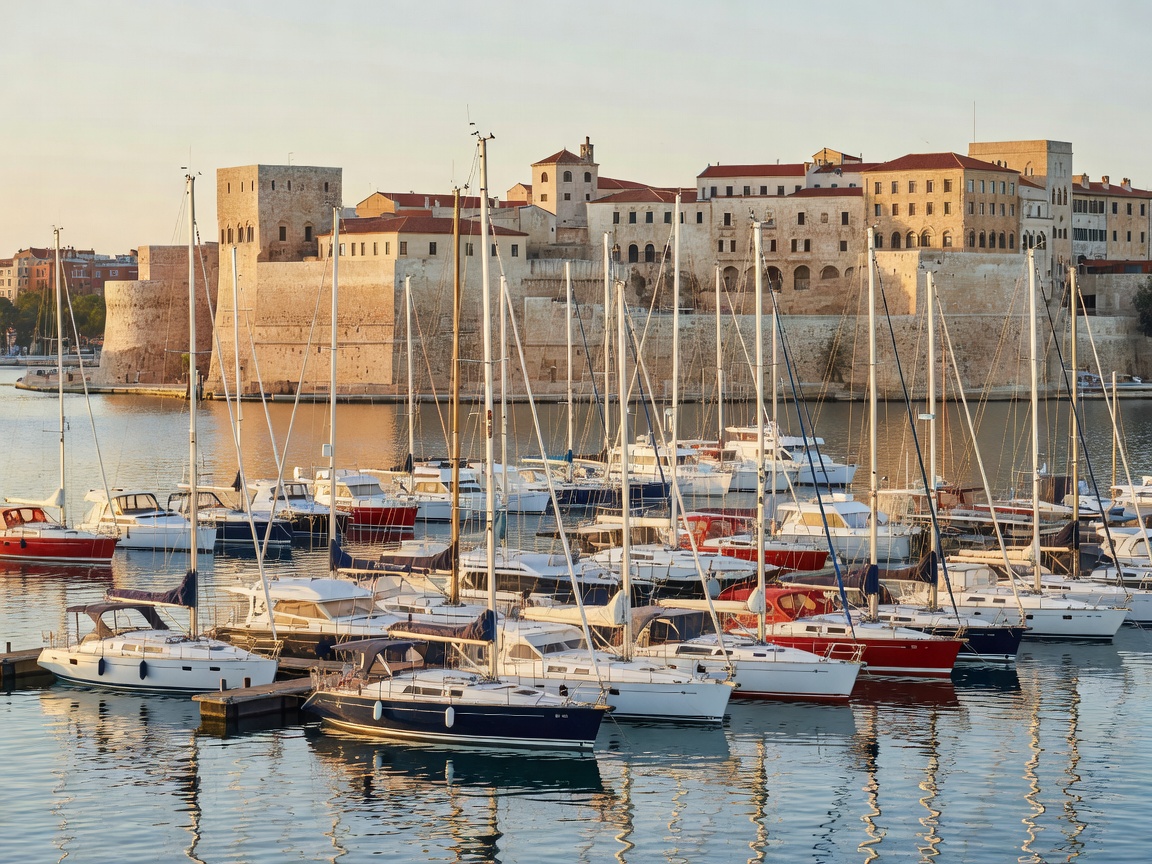
Why Split matters to used-boat buyers
Split sits at the centre of the Dalmatian coast, with the islands of Brač, Šolta, Hvar and Vis all within a comfortable day's sail. That geography has turned the city and the neighbouring Kaštela bay into one of the busiest charter hubs in the Mediterranean. Charter companies renew their fleets on a rolling basis, and the boats they retire have to go somewhere — very often onto the local brokerage market.
For a buyer, the practical benefit is volume. When several boats of the same model and similar age are for sale within a short drive of each other, it becomes far easier to judge condition and value side by side. Marinas you will commonly see in listings include ACI Marina Split on the city peninsula and Marina Kaštela in the bay towards the airport. Split Airport lies between Split and Trogir, so viewing several boats over a long weekend is realistic.
What you will typically find
The backbone of the Split market is the mass-production cruising yacht built for charter. Expect plenty of Bavaria Cruiser, Jeanneau Sun Odyssey, Beneteau Oceanis and Dufour monohulls, along with Elan models from neighbouring Slovenia. On the multihull side, Lagoon, Fountaine Pajot and Bali catamarans are common because group charters favour their space.
Most of these boats come in a "charter version" layout: three or four double cabins and as many heads as the hull allows. That suits families, groups of friends, or anyone who intends to put the boat back into charter management. Couples may prefer an "owner's version" with a larger aft cabin — rarer on this market, so worth snapping up when it appears.
| Category | Why it is common here | Wear to inspect | Relative value |
|---|---|---|---|
| Sailing monohull, 38–46 ft | The mainstay of bareboat fleets | Sails, running rigging, rudder bearings, topside gelcoat scuffs from fendering | Often the best value per metre |
| Cruising catamaran, 40–46 ft | High demand from group charters | Saildrive seals, bridge-deck damage, twin-engine hours, trampolines | Holds value well; higher entry cost |
| Motor cruiser or flybridge | Popular for day and week charters | Engine hours, shafts and stern gear, generator, exhaust elbows | Wide spread; running costs dominate |
| RIB or day boat | Tenders and excursion craft | Tube seams, outboard service history, trailer condition | Lowest entry cost, fastest wear |
Pros and cons of buying in Split
Advantages
- The widest choice of comparable boats on the coast.
- An established service base of riggers, sailmakers, engine dealers and surveyors.
- Easy logistics thanks to the airport and island ferry links.
- Many boats carry documented maintenance from professional charter operators.
Drawbacks
- Charter boats are used hard by many different skippers.
- Summer viewings are difficult because boats are out working.
- Popular models can sell quickly in autumn, squeezing due diligence.
- City berths are in heavy demand, and a berth rarely transfers with the boat.
Timing your purchase
Charter boats generally work from spring to autumn. Retired boats tend to be listed towards the end of the season and through the winter, when they can be hauled out, surveyed and sea-trialled without disrupting bookings. Buying in this window also gives you time to complete any refit before your own first season.
Be wary of pressure to commit before a survey because "another buyer is interested". With a steady supply of similar boats, walking away from one that does not survey well is rarely a real loss.
A Split-specific checklist
- Request the maintenance log and ask directly about groundings and insurance claims.
- Have the keel-to-hull joint and keel bolts inspected — charter boats touch bottom more often than private ones.
- Assume original sails will need replacing and price that in.
- Confirm EU VAT status and whether the boat has ever left the EU.
- Ask how the boat will be deleted from the Croatian register if you plan to flag it elsewhere.
- Hire a surveyor with no connection to the seller or broker.
- Sea-trial in a moderate breeze to load the rig and steering properly.