Guide 02 · Central Dalmatia
Trogir: refit yards, quiet berths and project-boat bargains
Trogir is small, but its waterfront has a long shipbuilding and boat-service tradition. For buyers willing to haul out, survey thoroughly and invest in a refit, it can be the most rewarding harbour on the coast.
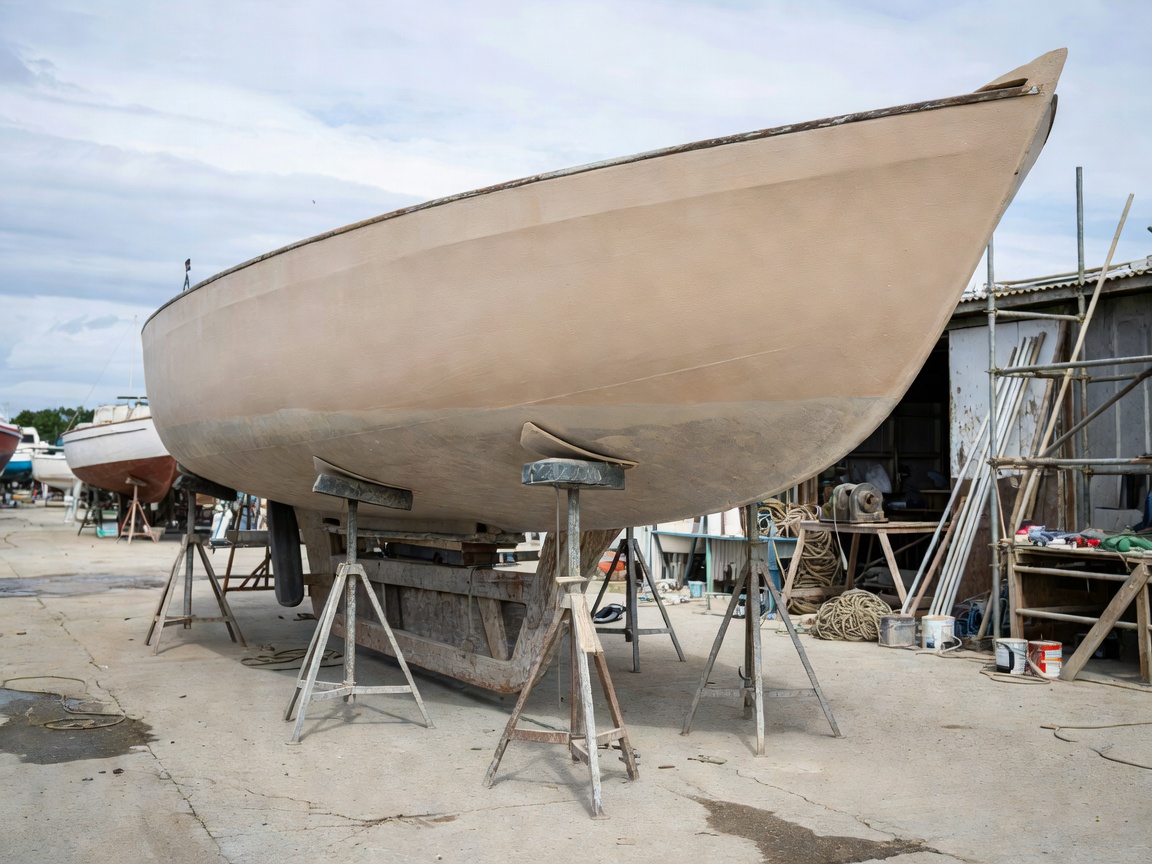
A small town with a big technical footprint
Trogir's old town sits on a tiny island between the mainland and the island of Čiovo, and is listed as a UNESCO World Heritage Site. Beyond the postcard views, the area has long been associated with shipbuilding, and today the channel and surrounding coast host marinas and yards offering haul-out, storage and repair work. ACI Marina Trogir faces the old town from the Čiovo side, while Marina Baotić lies a short way west at Seget Donji.
The airport is only minutes away, which is useful when you need to return several times during a refit. And because Split's charter hub is next door, Trogir is where many retired boats end up for their post-charter overhaul — or where they wait for a buyer who is willing to do it.
Buy-ready, light refit or project?
Most listings fall into one of three condition tiers. Knowing which one you are looking at — regardless of how the advert describes it — is the first step to paying the right price.
| Tier | What it usually means | Survey focus | Who it suits |
|---|---|---|---|
| Buy-ready | Recent antifouling, serviced engine, sails in usable shape, systems working | Confirm claims with receipts; check hull moisture and rig age | Buyers who want to sail this season |
| Light refit | Sound hull and engine, but tired sails, canvas, upholstery or electronics | Price each cosmetic item; confirm there is nothing structural hiding | Most value-focused buyers |
| Project | Laid up, neglected, or with known structural, engine or osmosis issues | Full structural survey, engine specialist, moisture mapping | Experienced owners with time and a contingency budget |
Reading a refit budget
A refit quote should break costs into clear lines, not a single figure. The usual categories are haul-out, storage and launch; antifouling and hull preparation; standing and running rigging; sails; engine service or overhaul; batteries and charging; electronics; canvas and upholstery; and safety equipment such as liferaft servicing and flares.
Rigging and sails are the items most often underestimated. Many surveyors and insurers recommend replacing standing rigging after roughly ten to fifteen years regardless of appearance, and some insurers ask for proof of rigging age. If the listing does not state when the rig was last replaced, assume it will need doing.
Always keep a contingency. Refits uncover things: a soft deck core around a stanchion, a corroded seacock, a wiring loom patched by several previous owners. The larger and older the project, the larger that margin should be.
Pros and cons of buying in Trogir
Advantages
- Yards and trades clustered close together, reducing logistics.
- Project boats and neglected listings can be negotiated hard.
- Easy to combine viewings with Split's larger market.
- Winter refits can be scheduled before the spring rush.
Drawbacks
- Refit costs can overtake the savings on the purchase price.
- Yard slots fill up before spring, so planning matters.
- Managing work remotely requires a trusted local contact.
- Project boats are harder to insure until the work is complete.
Negotiating on survey findings
Treat the survey report as a negotiating document. Separate findings into three groups: safety-critical items that must be fixed before sailing, items that affect value, and cosmetic points. Get written quotes for the first two groups and present them to the seller. A reasonable seller expects a price adjustment for significant findings; one who refuses any discussion on a documented structural issue is telling you something useful.
A Trogir-specific checklist
- Insist on a haul-out survey, not just an afloat inspection.
- Ask for moisture readings across the underwater hull.
- Record the age of standing rigging, sails and batteries.
- Request written, itemised refit quotes before agreeing a price.
- Book yard time early if you plan a winter refit.
- Agree storage and launch terms in writing.